Cahokia Jazz A Novel
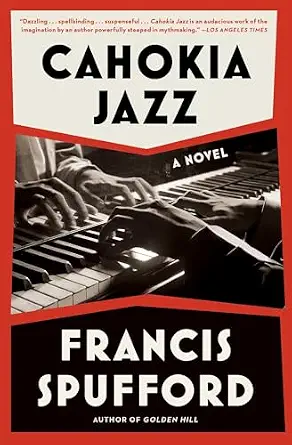
Author: Spufford, Francis
Tags: mystery, police procedural, thriller, alternate history, american indian
Timeline: between Sunday, October 11, 2026 and Wednesday, October 14, 2026
Barrow squinted, and the scene resolved itself. The bundle at the head end was the dead man’s clothes, shirt and jacket and coat pulled inside out over his face. The peculiar fans were his ribs, cracked open and somehow pulled wide. Since he was the one holding the light, Barrow stepped closer and shone the beam in, on a cavity full of red ruin and streaked bone, with the tangle of liver and guts visible at one extremity, and a frosting of granular pink from the snow. The best you could say for the view was that it was tidier than the effect of a shell burst. But there was less in the hole than there should have been: this was obvious. It was a cavity reamed out, a space from which something had been torn.
Another book that got a mention on the A Meal of Thorns podcast as alternative history. In this version of 1923, the city of Cahokia is located where Saint Louis would be and the town is populated by white, black and native american. Native Americans are the majority controlling the city government with a parallel tribal monarchy and, Anopa, the language of the indians is widely spoken. Joe Barrow, a native american orphan and white partner Phin Drummond are detectives who catch the case of a murder staged to look like an Aztec sacrifice which case then spins into an attempt to overthrow the government so that whites can take power in the crisis. The Klan shows up, so does the Catholic church, so does WWI, as Joe and Phin met during the war. The author uses the Anopa language in fragments throughout the book to establish the aboriginal verisimilitude.
Anyway, Joe Barrow is a big, dark handsome and charismatic hero who plays jazz when not working. He gets the girl and is wanted by other girls. The story is a cheesy murder mystery, with interesting plot twists on the political intrigues of the civil and aboriginal government. The prose is strong without being too flashy and the author provides additional explanatory text at the end of the book, long story short: in this history, the small pox virus was not nearly as virulent as it was in our timeline so the natives manage to retain a much larger degree of power against the encroaching colonists. Fun book.