Cold Comfort Farm
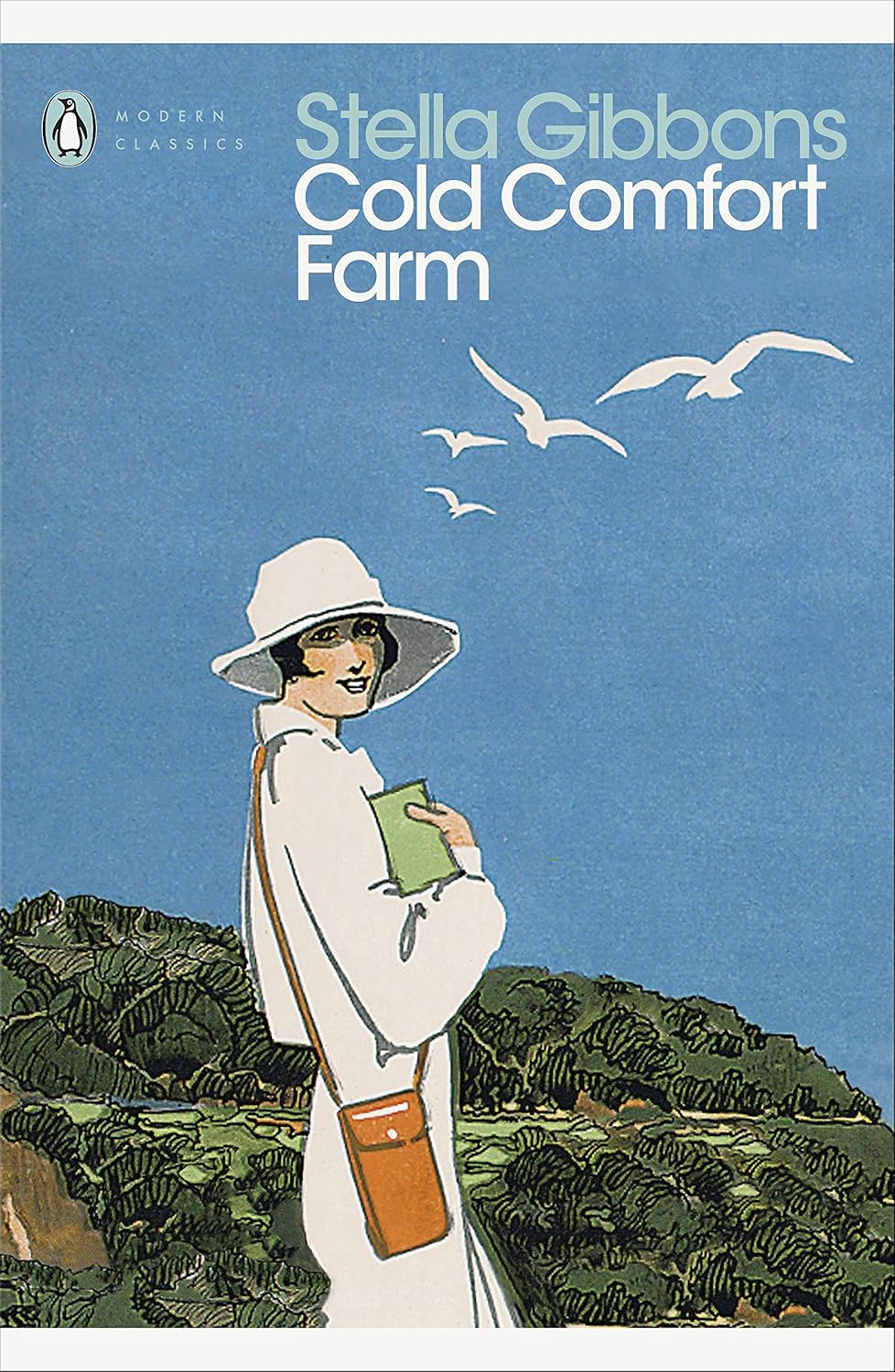
Author: Gibbons, Stella
Tags: humor, edifying, sci-fi
Timeline: between Saturday, April 4, 2026 and Saturday, April 11, 2026
Flora inherited, however, from her father a strong will and from her mother a slender ankle. The one had not been impaired by always having her own way nor the other by the violent athletic sports in which she had been compelled to take part, but she realized that neither was adequate as an equipment for earning her keep.
A strong-willed, self-confident, 19-yo socialite Flora Poste, in the aftermath of losing her parents, having no large inheritance decides that she will find a relative to live with and, “When I have found a relative who is willing to have me, I shall take him or her in hand, and alter his or her character and mode of living to suit my own taste. Then, when it pleases me, I shall marry.”
She receives a positive response from a farm in Sussex where live the Starkadders, “We are not like other folk, maybe, but there have always been Starkadders at Cold Comfort, and we will do our best to welcome Robert Poste’s child.”, and that farm soon becomes her home.
The rest of the book describes life on the farm and the many odd characters who live there, including cousin Urk who raises water-voles, the cows, Feckless, Aimless, Graceless and Pointless and, most importantly, crazy aunt Ada Doom who never leaves her room yet somehow controls the farm. And as promised, clever, resourceful, relentless Flora remolds the lives of the inhabitants of the farm to an eventual happy ending.
One oddness of the book is that it is science fiction, in the sense that it takes place in (at least) the 1940s (the book having been written around 1930). The science fiction plot devices exist yet are not important to the plot, for example at one point Flora is using “television” (essentially video calling) for a conversation which could have been accomplished using a plain old phone, and the story also speculates that (propeller-driven) flight has become a common, frequent mode of transportation for the rich.
This book has so much lush prose, for random example, “At the farm, life burgeoned and was quick. A thick, shameless cooing was laid down, stroke on stroke, through the warm air from the throats of the wood-pigeons until the very atmosphere seemed covered with a rich patina of love.” It is meant to be too lush in order to satirize romance novels, but apparently the "too-lush"ness was lost on me, I loved it all.
Lastly, if I can believe the helpful essay at the Penguin added to the end of the book, this book is part of the Anglophile canon such that quotes from the book are a shibboleth of English-ness. I am happy to feel that by reading this book I have earned my anglophile badge.